Ball Sort Puz - Color Game
- 4.8
- Rating
- 10.00M
- Installs
- Free
- Price
 Analysis by App-foxy
I usually reach for a sorting puzzle when I want something calm enough for a short break but still capable of holding my attention. Ball Sort Puz - Color Game fits that space well. It is a free puzzle game from Bluetile in which I move colored balls between bottles until each bottle contains one color. The idea is immediately understandable, yet the number of available moves can make a seemingly simple board surprisingly demanding.
After spending time with it, my impression is that its strongest quality is its low barrier to entry. I do not need a tutorial-heavy introduction or a long session to enjoy it. I can open a level, solve part of it while waiting somewhere, and return later when I have more time. At the same time, it is not merely a reflex game. The best results come from planning space, protecting useful empty bottles, and resisting the temptation to make the first legal move that appears.
How the current puzzle experience feels
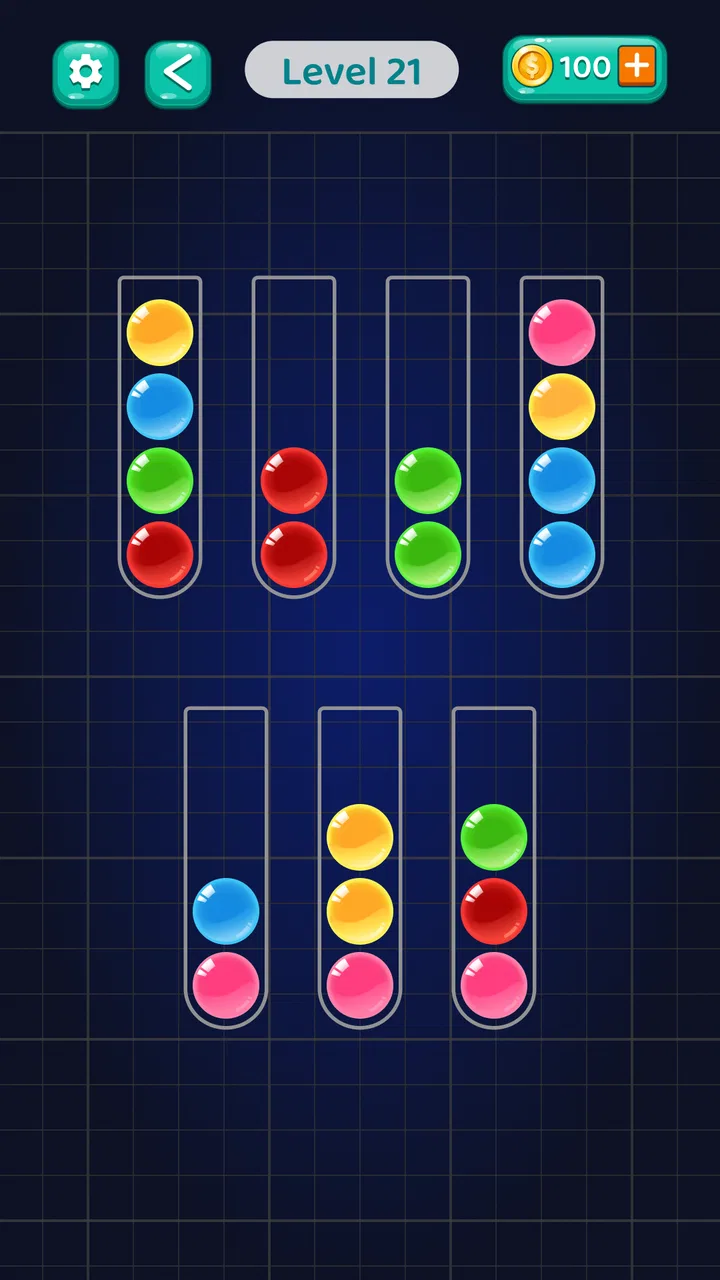
The game belongs to the casual puzzle category, but I would describe its rhythm as more thoughtful than frantic. Each bottle holds a stack of colored balls, and the objective is to gather matching colors together. A move is useful only when it respects the available space and the color already exposed at the destination. That creates a small planning problem on every board: I have to decide which color to uncover, where to place it, and which bottle should remain available for temporary storage.
You May Also Like

 Blood Strike: 2.5 Anniversary
Blood Strike’s Loadouts Turn Every Drop Into a Tactical Gamble
A close look at Blood Strike’s custom loadouts: how fast access to signature weapons reshapes its battle royale rhythm, rewards preparation, and narrows the gap between fights.

 Pandora - Music & Podcasts
Pandora’s Music Is Easy to Start, but Harder to Recover
Pandora’s strength is its low-effort path from a seed to a station. Its weak spot is how much confidence it asks you to place in connection, setup, and quiet recovery.

 8 Ball Pool
 Is Built on Rivalries, Rematches, and Routine
A close look at the rivalries, rematches, shared routines, and unanswered safety questions that turn a quick pool match into a persistent mobile community.

 Samsung Music
’s Quiet Strength Is Playing What You Already Own
Its reach comes less from spectacle than from dependable access to a personal library. That simplicity is both the app’s strongest retention engine and its ceiling.

 AccuWeather: Weather Radar
AccuWeather Review: A Quick, Clear Forecast for Everyday Decisions
For everyday plans, the best forecast is the one you can understand quickly. AccuWeather makes rain timing, radar, and local conditions easy to act on, with a few trade-offs.

 Hill Climb Racing
Why Hill Climb Racing Still Turns Crashes Into One More Run
A tiny car, a bumpy hill and one more upgrade: Hill Climb Racing keeps resurfacing because its simple chaos makes every near-miss feel personal.
More From Our News Desk



That temporary storage is the part that gives the game its character. An empty bottle is not simply a spare container. It is a resource that can unlock a buried color, let me reverse a poor arrangement, or create enough room to complete a chain of matching moves. If I fill every open space too quickly, I can leave myself with no practical route forward even when the board still looks close to solved.
I found the early experience especially approachable. The rules can be understood almost instantly, so it works for someone who has never played a bottle-sorting puzzle before. The challenge comes from gradually recognizing patterns rather than learning complicated controls. That makes it suitable for a quick mental reset, although players who want a large story, character progression, or action-based variety will probably find the format too narrow.
The touch interaction is naturally suited to phones. I tap a source bottle and then a destination bottle, which keeps the focus on the decision instead of on elaborate gestures. That simplicity is valuable when playing one-handed during a commute or while taking a short break. It also means that the quality of a session depends heavily on the puzzle layout; there is no complex control system to distract from whether the level itself is satisfying.
Small decisions matter more than fast tapping
My most useful habit has been to pause before moving a color that is already exposed. I first scan the bottles for colors that are blocking several others, then look for a move that opens a new possibility rather than merely making one bottle look tidier. This approach is more reliable than sorting the easiest pair immediately.
Another practical technique is to treat a partially filled bottle as a temporary commitment. Once I place a color there, I ask whether that bottle will still be useful if I need to move another stack through it. This prevents a common mistake: creating a neat-looking group that occupies the only space needed for a more important maneuver.
When I get stuck, I do not automatically restart. I retrace the last few moves and look for the point where I used an empty bottle without gaining access to a new color. In many cases, the problem is not the entire solution but one inefficient decision near the beginning. That makes the game a good exercise in reviewing choices rather than simply trying random taps.
What the latest version means in practice
The current version is 2.6.1, and the game has been available since December 1, 2022. I see that history as a sign that this is an established title rather than a brand-new experiment. For someone considering a download today, the important point is that the basic appeal remains focused: this is a compact color-sorting puzzle, not a game that asks me to learn a large collection of unrelated systems.
I would not interpret the version number as a promise of a particular feature set or as evidence that every player will notice a dramatic change. What it does tell me is that the installed experience is tied to a maintained release line, which is reassuring when I want a familiar puzzle to remain available over time. The practical decision is still whether this specific style of play suits me.
Existing users who already enjoy the game should find the current release easy to return to because the central interaction is straightforward and repeatable. I can pick it up after several days without having to remember a story or rebuild a complicated strategy. That continuity is one of its strengths, but it also highlights the main trade-off: players hoping for a radically different experience from one session to the next may eventually want a broader puzzle collection.
The game has reached more than ten million installs and holds an average rating of 4.8 from around five hundred thousand ratings. Those figures suggest that its simple format connects with a large audience, but I still would not use popularity as a substitute for personal fit. A highly rated sorting game can be excellent for someone who enjoys methodical organization and uninteresting for someone who needs constant novelty.
Who gets the most from it
I think it is particularly well suited to people who like clear goals and gradual difficulty. The rules are easy enough for casual players, while the arrangement of colors gives more experienced puzzle fans room to think ahead. It is also a good option for short sessions because a player can focus on one board without committing to a long match or a continuous campaign.
A realistic everyday use is a ten-minute pause between tasks. I might open a level while waiting for a meeting to start, solve a few moves, and stop without feeling that I have abandoned a larger objective. The game’s quiet, turn-based nature makes it less demanding than a fast arcade title and less socially dependent than a multiplayer puzzle.
It can also work as a gentle way to shift attention away from repetitive scrolling. The board gives me a concrete problem to hold in my mind, and every move has a visible consequence. I would not call it a substitute for a full logic-training program, but it does encourage useful habits such as looking ahead, preserving options, and reconsidering an earlier assumption.
Families may appreciate the Everyone content rating and the easy-to-explain rules. A parent can understand the objective quickly and help a younger player think through a blocked board without needing to learn a complicated control scheme. Still, the rating does not mean every child will find it engaging; the appeal depends on enjoying quiet problem-solving rather than animation-heavy rewards.
On the other hand, I would skip it if I want narrative progression, competitive ranking as the main attraction, or a constant stream of different mechanics. I would also look elsewhere if sorting colors feels repetitive to me after a few rounds. The game’s identity is its narrow focus, and that is both what makes it accessible and what can limit its long-term variety.
Where it compares well with other puzzle choices
Compared with match-three games, this title asks for more deliberate planning and less rapid pattern recognition. There is no need to chase a chain of quick combinations; I can take my time and examine the whole arrangement. That makes it better for a calm break, while a match-three alternative may be more satisfying when I want brighter feedback and faster momentum.
Compared with crossword or word puzzles, Ball Sort Puz avoids language knowledge. The challenge comes from spatial organization and move order, so it is easy to understand even when I am tired or do not want to concentrate on vocabulary. Word games can offer more variety in subject matter, but this one reaches its core activity much faster.
Compared with complex logic games, it is much easier to start. I do not need to learn a large rulebook or understand several interacting systems before the first meaningful decision. The trade-off is depth: a dedicated logic title may reward longer analysis and offer more distinct puzzle types, whereas this game builds depth mainly by changing the arrangement of the bottles and colors.
That comparison helped me place it correctly. I see it as a focused casual puzzle for repeated short visits, not as a complete replacement for every kind of brain game. If I want a dependable sorting challenge with minimal setup, it is a strong choice. If I want a varied collection of logic problems, I would use it alongside something broader rather than relying on it alone.
Friction points worth considering
The biggest limitation is repetition. Once I understand the basic strategy, the pleasure depends on how well new arrangements continue to challenge me. Players who enjoy refining one familiar mechanic may find that satisfying, but others may feel that the experience changes too slowly.
There is also a difference between a legal move and a good move. Beginners can make progress by tapping any compatible bottles, then discover that the remaining layout has become awkward. That is not a flaw in the rules, but it can make the game feel unfair until I learn to preserve empty space and avoid exposing too many unrelated colors at once.
The game is free to download, with in-app purchases ranging from $0.99 to $21.99 per item. I would keep that in mind before starting if I prefer completely purchase-free games. A free entry point is convenient, but the presence of optional spending means I would review any purchase prompt carefully and decide in advance whether I want to spend anything.
There is no reason to rush through a board simply because I have opened it. In fact, hurried play is where I make most of my mistakes. I get more value from treating each level like a small planning exercise, especially when a bottle contains a color that I need later but cannot safely expose yet.
Practical advice before downloading
The game supports devices running Android 7.0 or later, so I would check that requirement before trying to install it on an older phone or tablet. It is free to begin, which lowers the risk of testing whether the sorting format suits me. I would start with a few short sessions rather than judging it after one easy board.
For a smoother experience, I recommend using a simple mental checklist: identify the most buried useful color, preserve at least one flexible space, and avoid filling a bottle unless the move improves the future layout. This is more effective than focusing only on completed color groups. The goal is not just to make progress now, but to keep enough options open for the next several moves.
If I am playing while distracted, I choose boards when I have enough attention to remember the consequences of a move. The controls are simple, but the puzzle can punish absent-minded decisions. A short pause to inspect every bottle usually saves more time than repeatedly undoing or restarting after the position becomes difficult.
For someone worried about storage or commitment, the compact concept is appealing because it does not require learning a large fictional world or maintaining a daily routine to understand what is happening. For someone concerned about spending, I would treat the free version as a trial and avoid assuming that every convenience is included without cost.
My recommendation after using it
Ball Sort Puz - Color Game is a good recommendation for a friend who enjoys tidy visual puzzles, short sessions, and decisions that become harder when space is limited. Bluetile has built the experience around one clear idea and made that idea easy to access. Its strong rating and wide install base reflect that approachable design, while the Everyone rating makes it a comfortable option for a broad audience.
I would recommend it most confidently as a break-time game rather than as someone’s only puzzle app. It is satisfying when I want to organize a messy board, think a few moves ahead, and finish with a clear sense of completion. It is less convincing for players who need stories, action, social competition, or frequent changes in gameplay.
The current release gives returning players a stable reason to keep the game installed, but the long-term question is variety. I would watch how future updates continue to keep the central sorting challenge interesting without making it unnecessarily complicated. For now, the focused design works in its favor: the best part is the careful use of space, not fast tapping.
My final view is positive, with a clear qualification. This is a polished-feeling, accessible color-sorting puzzle that earns its place on a phone when I want a calm challenge I can start and stop easily. I would try it if that sounds appealing, while choosing a broader logic or word-puzzle app if I already know that repetition is likely to wear me down.
FAQs for Ball Sort Puz - Color Game
01What is the main objective of Ball Sort Puz - Color Game?
The primary goal of Ball Sort Puz - Color Game is to sort colored balls into their respective tubes until each tube contains balls of the same color. This brain-teasing puzzle challenges your logical thinking and problem-solving skills, making it both entertaining and intellectually stimulating.
02Is Ball Sort Puz - Color Game suitable for all ages?
Yes, Ball Sort Puz - Color Game is designed to be accessible and enjoyable for players of all ages. Its intuitive interface and simple controls make it easy for children, while the increasing complexity of levels provides a challenge for adults, ensuring a fun experience for everyone.
03Does Ball Sort Puz - Color Game require an internet connection to play?
No, one of the advantages of Ball Sort Puz - Color Game is that it can be played offline. You don’t need an internet connection to enjoy the game, making it perfect for playing on the go or in areas with limited connectivity.
04Are there any in-app purchases in Ball Sort Puz - Color Game?
Yes, the game offers in-app purchases. While the game is free to download and play, players may encounter optional in-app purchases that can enhance gameplay, such as hints or additional levels. However, these purchases are not necessary to enjoy the full experience.
05How challenging is Ball Sort Puz - Color Game?
The game starts with simple puzzles to help players learn the mechanics but quickly ramps up in difficulty. As you progress, you'll face increasingly complex puzzles that require strategic planning and foresight, making it a perfect choice for puzzle enthusiasts seeking a challenge.
Pros
- Simple yet addictive gameplay.
- Visually appealing color design.
- Enhances problem-solving skills.
- Quick and responsive controls.
- Great for short play sessions.
Cons
- Repetitive levels may bore some.
- Ads can be intrusive.
- In-app purchases for hints.
- Limited level variety.
- No offline mode available.

Ball Sort Puz - Color Game
Gallery